
Why Secularism for Uyghurs?
I. Introduction
Although the Uyghur Turks have long been portrayed as a separatist national security issue in terms of radicalism, Islamic terrorism and China, this framework does not reflect the historical or cultural reality of Uyghur society. For centuries, the religious life of the Uyghurs has been shaped and sustained primarily around Sufi traditions and their own cultural practices. However, particularly over the last 30–35 years, political and cultural pressures, sanctions against Uyghur identity, and contacts established with foreign countries have led a small portion of Uyghurs to be influenced by radical structures, either individually or in limited groups. These limited examples of radicalisation have subsequently been used by China as a basis for harsh security policies targeting the entire Uyghur community.
Following 2001, with the rise of the global ‘War on Terror’ rhetoric, the Uyghur issue began to be addressed in relation to international radical organisations and global ‘jihad’ networks. The outbreak of the Syrian Civil War, the emergence of ISIS (Daesh), and the discourse that some Uyghur groups were present within this organisation made the Uyghur issue part of security debates not only within China's borders but also globally.
On the one hand, China's decades-long severe human rights violations against the Uyghurs and, on the other hand, the limited but nonetheless significant influence of radical Islam and terrorist rhetoric on the Uyghurs clearly demonstrate that the Uyghur issue and the problems faced by the Uyghurs cannot be addressed solely from a security perspective. This process, in which faith, culture, identity, politics and international power balances are intertwined, necessitates a more in-depth assessment of the Uyghur issue on both a regional and global scale.
II. The Uyghurs' Understanding of Islam
Historically, the Uyghurs have not socially adhered to radical or extreme religious traditions. Their radicalisation in terms of religious life and social practices has emerged in the last few decades as a result of external influences and internal pressures, and is being instrumentalised by the Beijing administration to legitimise its widespread repressive policies (Castets, 2003; Biziuk, 2022).
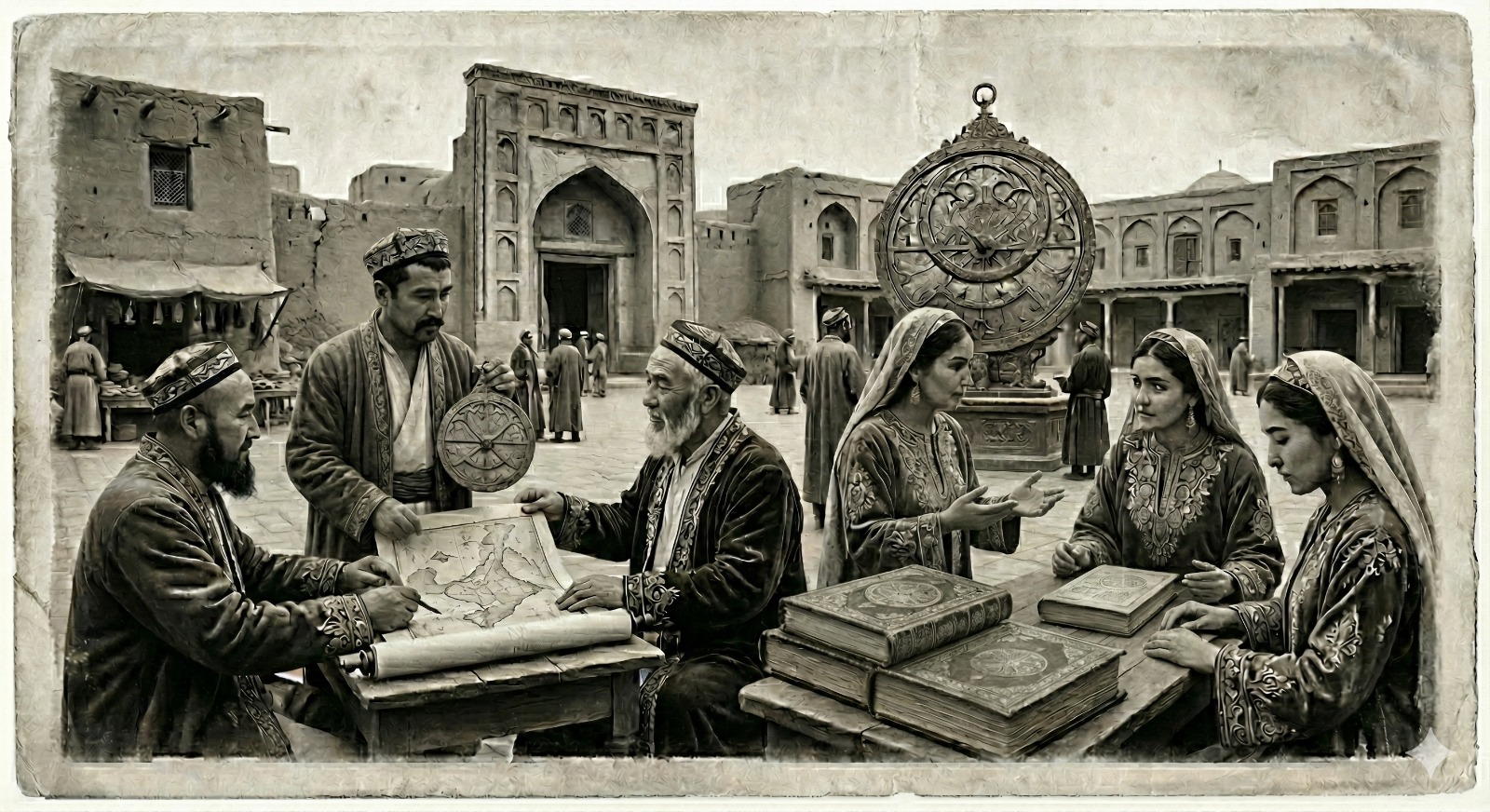
Throughout their history prior to embracing Islam, the Uyghurs belonged to many religions, including traditional Central Asian religions, Shamanism, Buddhism, and Manichaeism. The influence of these different religions, along with customs and lifestyles dating back hundreds of years, has shaped the way Islam is practised (Bellér-Hann, 2008). After the Uyghurs encountered Islam in the late 8th or early 9th century and underwent a centuries-long transition to Islam, they practised a form of religion that could be described as ‘Turkish-style,’ intertwined with their own traditions and Sufi practices. This Islamic understanding, while framed within the Sunni-Hanafi school of thought, developed and was practised in a more moderate and inclusive manner, blending with their own lifestyle, customs, and local folk beliefs. Many customs that do not correspond to radical Islamic practices and are even considered shirk by some circles have persisted in the Uyghurs' practice of Islam. Cultural elements such as tomb and grave visits, religious rituals performed on specific days and nights, the important place of traditional Uyghur clothing in daily life (although this has declined in the modern era, it is still used on important days such as weddings, celebrations, and ceremonies for important guests), and the presence of traditional Uyghur dances at various events and celebrations are examples of this situation (Bellér-Hann, 2008; Waite, 2006).
In this context, for the Uyghurs, Islam as practised within the Sunni-Hanafi school is not merely a belief, but also a way of life that forms the memory of the community, ensures cultural continuity, and is an integral part of Uyghur identity (Bellér-Hann, 2008; Ercilasun & Ercilasun, 2018). The influence of Sufi movements in the Turkistan region from early times ensured that religious practices developed accordingly and were passed down from generation to generation for centuries. For this reason, the traditional Islamic understanding of the Uyghurs, in line with the Sunni-Hanafi school of thought, has a structure based more on cultural and Sufi foundations.
This soft, Sufi and culturally based belief structure of the Uyghurs naturally contrasts with Salafi-Wahhabi interpretations, which is one of the main reasons why radical movements have historically failed to gain ground among the Uyghurs (Waite, 2006; Castets, 2003).
Uygurların yumuşak, tasavvufi ve kültürel temelli bu inanç yapısı, Selefi-Vahhabi yorumlarla doğal bir zıt durum oluşturduğundan, radikal akımların tarihsel olarak Uygurlar arasında zemin bulamamasının temel nedenlerinden biri de bu olmuştur (Waite, 2006; Castets, 2003).
III. How did the Uyghurs Encounter Salafi Ideology?
How did the Uyghurs encounter Salafism? There are actually many aspects to this question, but here I would like to briefly touch upon the historical process and the subsequent radicalisation of some Uyghurs.
It is thought that the Uyghurs first encountered this ideology in Mecca and Medina during the 19th and early 20th centuries, when they travelled there to perform the Hajj pilgrimage (Waite, 2006). During the collapse of the Ottoman Empire, the Wahhabi doctrine gained strength as these regions broke away from Ottoman rule and came into limited contact with the Uyghurs. However, this doctrine, which was completely incompatible with the religious interpretation that the Uyghurs had practised for over a thousand years, did not resonate with the Uyghurs of that period and did not gain widespread acceptance. These early contacts did not produce a social response due to the Uyghurs' deep-rooted religious and cultural structures, and the Salafi-Wahhabi interpretations remained a marginal sphere of influence linked to external contacts (Waite, 2006; Bellér-Hann, 2008).
In later periods, after the Communist Revolution, under Mao's rule, especially during the dark years of the Cultural Revolution, heavy pressure was exerted on the religious life of the Uyghurs. During this period, Uyghurs, unable to practise their religion, were unable to practise their religious rituals to any significant extent due to this heavy pressure and were forced to practise them secretly (Waite, 2006). However, after Mao, with the ‘relatively free’ management approach of the Deng Xiaoping era, when China entered the world market, the Uyghurs were able to continue practising their religion with a degree of ease. During this period, publications related to Islam increased, mosques were renovated, and Quran courses were opened (some of these courses were affiliated with mosques, while others were not officially registered) (Waite, 2006). The periodic increase and decrease in state pressure made the religious sphere of the Uyghurs fragile. This fragility paved the way for some individuals to become more vulnerable to external radical movements in subsequent years.
IV. The Instrumentalisation of Radicalisation
The Chinese administration has intensified its crackdown, concerned that this period of ‘relative relaxation’ could become militarised and that the Islamic-Pan-Turkist movements emerging in the region could lead to separatism. For example, the ‘meşrep/meshrep’ movement, which emerged in Gulca province in the early 1990s with the aim of preserving Uyghur culture and identity, was seen by China as anti-regime, banned in 1995, and its leaders imprisoned (Castets, 2003).
By the end of the 1980s and early 1990s, the decline of the Soviet Union's influence and its collapse in 1991 gave rise to renewed thoughts of independence for the Uyghurs in the face of Communist China (Castets, 2003; Ercilasun & Ercilasun, 2018). China's repressive policies have pushed some of the more peaceful communities in the Uyghur region towards radicalisation. With the easing of travel restrictions, some Uyghurs who left the country for various reasons during this period came into contact with radical organisations in Central Asian countries, Saudi Arabia during the Hajj, Pakistan and Afghanistan (Waite, 2006; Castets, 2003). These contacts did not lead to radicalisation on a societal scale, but rather emerged initially at an individual level. Economic exclusion, political and cultural pressure, and identity crises created by diaspora conditions made some individuals more ‘receptive’ to radical organisation networks. By the late 1990s, some Uyghurs who had come into contact with these organisations had also established their own radical Islamist organisations, such as the East Turkestan Islamic Movement/Party (ETIM/ETIP). These limited examples of radicalisation became a strategic tool for the Beijing administration in the subsequent period to frame the Uyghur community entirely as a security threat and began to be used as a justification for its tougher policies, depending on the international context (Castets, 2003; Biziuk, 2022).
Following the 9/11 attacks, the rhetoric of the ‘War on Terror’ rose around the world. China seized the opportunity to reshape its ‘security policies’ in East Turkestan by using this rhetoric in its domestic politics (Castets, 2003; Biziuk, 2022). The long-standing tensions, the repressive policies implemented by the Beijing administration, and the ‘Uyghur issue,’ which China views as ‘separatism,’ have been presented to the international community as a security threat linked to international radical terrorism, with the aim of legitimising them in this period. As a result of this framing, the Chinese government has gained a basis for further intensifying its repressive policies by casting the Uyghurs' demands to freely practise their religion and culture within the framework of ‘radicalism’ and ‘Islamic terrorism’ (Castets, 2003; Biziuk, 2022). Thus, the Beijing administration has both tightened security policies in the region to the desired level and ensured that its detentions, terrorist organisation accusations, and restrictions on religious freedom receive less international backlash by citing the threat of radical Islam. In this way, China has used the rhetoric of joint action against the global Islamic terrorist threat to legitimise its own policies, making its oppression of the Uyghurs more defensible on the international stage. From this point onwards, China's security approach transformed from combating individual cases of radicalisation into a systematic ‘preventive pressure strategy’ that positioned the entire Uyghur community as a potential threat, paving the way for the security-focused restructuring of state capacity.
During this period, China significantly increased its military and police presence in East Turkestan, conducted operations under the banner of ‘Counter-Terrorism,’ and made mass detentions and house raids routine (Biziuk, 2022). It has enacted very broad terrorism and extremism laws and arrested many Uyghur activists, intellectuals and religious figures on the grounds of ‘terrorist propaganda’. Mosques and madrasas have been closed, and practices such as fasting, religious gatherings, wearing religious clothing, and growing beards have been banned as ‘extremism’ (Waite, 2006; Biziuk, 2022). Furthermore, in subsequent years, one of the world's most intensive digital surveillance systems has been established in East Turkestan.
V. Two Sides of the Coin: Radicalism and China's Pragmatic Approach
These pressures, which continued to increase after 2001, reached their peak in 2014 with the launch of the ‘Strike Hard Campaign Against Violent Terrorism’ targeting Uyghurs and other ethnic Turks. Under this campaign, mass detentions, extrajudicial killings, and cultural and religious assimilation policies became widespread; after 2016, mass re-education (internment camps) programmes under the guise of ‘Vocational Education Centres’ became systematic policy (The Guardian, 2021). Millions of Uyghurs have been subjected to forced ideological education, ‘state obedience’ programmes, and large-scale forced labour practices. These practices are considered serious violations under international human rights norms, falling into the categories of mass deprivation of liberty, forced ideological transformation, and cultural erasure, and are defined in numerous international reports as a systematic state policy (UN Human Rights Office, 2022; International Labour Organisation, 2022).
It is necessary to mention the East Turkestan Islamic Movement/Party, which was mentioned in the section above describing how the Uyghurs came into contact with Salafism-Wahhabism. Despite having only a limited number of militants, ETIM/ETIP has served as a ‘convenient enemy’ in Beijing's security discourse; China has turned this organisation into a symbolic threat to criminalise the entire Uyghur community. The Chinese administration legitimises its policies by attributing the consequences of the actions of this organisation, which it presents as representative of radical Islamist ideas seen only in a very small minority of Uyghurs, to all Uyghurs (Castets, 2003). Renamed the Turkistan Islamic Party (TIP) in 2006, this organisation established various connections with radical structures in Afghanistan and Pakistan during the Soviet-Afghan War, subsequently forging close ties with Al-Qaeda and the Taliban.
With the start of the Syrian civil war in 2011, the organisation sent thousands of jihadists to Syria, and fighters affiliated with this organisation fought alongside HTŞ against the Assad regime in Syria's Idlib region throughout the civil war (Tarihistan, 2025). After Assad's overthrow, they integrated into the new Syrian administration as a military unit (84th Division) in Idlib in a ‘legitimate’ manner. After the war in Syria largely ended, a significant portion of these fighters were targeted and called upon by the Khorasan branch of ISIS to be drawn to another jihadist region. The organisation attempted to draw TIP members from Syria to Afghanistan through propaganda activities targeting China. These experienced jihadists, who fought in Syria for over a decade, became a critical human resource for the ISIS structure in Afghanistan. The Taliban's harsh stance towards the Turkistan Islamic Party, due to its relations with China, has also brought these Uyghur militants closer to ISIS in that region.
As mentioned above, although there are no radical elements whatsoever in the traditional religious practices of the Uyghurs, it can be said that Salafi movements began to spread among the Uyghurs, particularly in the last 30–40 years. Turkey, one of the countries with the largest Uyghur population in the world, has also been affected by this situation. The Syrian civil war that began in 2011 and the subsequent emergence of ISIS in the Middle East resulted in some Uyghurs with ‘jihadist’ tendencies going to the region. Uyghur fighters who went to Syria took part in the conflict not only in the ranks of ISIS, TİP or HTŞ, but also within the Free Syrian Army (FSA).
With ISIS beginning to lose its influence in 2016–2017, many Salafi Uyghurs came to Turkey from Syria, and a significant portion of them still reside in Sefaköy, Istanbul. The fact that these groups have entered Turkey in recent years through these channels and have access to certain financial resources has paved the way for them to spread their extreme sectarian views more rapidly among Uyghurs in Turkey. These structures, which operate under the umbrella of various NGOs or as ‘large community–small community’ style religious structures in Istanbul, continue to promote and spread their jihadist ideology in Turkey. This situation should be seen as a security risk that requires careful consideration, not only for the Uyghurs but also for Turkey. For Turkey, this situation is not merely a transformation within the diaspora, but has also become a national security issue that must be closely monitored due to the possibility of radical networks taking root through established communities.
With the decline of ISIS's influence in 2016–2017, many Salafi-believing Uyghurs came to Turkey from Syria, and a significant portion of them still reside in Sefaköy, Istanbul, today. The fact that these groups have entered Turkey in recent years through these channels and have access to certain financial resources has paved the way for them to spread their extreme sectarian views more rapidly among Uyghurs in Turkey. These structures, which operate under the umbrella of various NGOs or as ‘large community–small community’ style religious structures in Istanbul, continue to promote and spread their jihadist ideology in Turkey. This situation should be seen as a security risk that requires careful consideration, not only for the Uyghurs but also for Turkey. For Turkey, this situation is not merely a transformation within the diaspora, but has also become a national security issue that must be closely monitored due to the possibility of radical networks taking root through established communities.
For the Chinese administration, the radicalisation of the Uyghurs is like two sides of the same coin. On the one hand, the existence of radicalised groups, particularly thousands of Uyghur jihadists with years of combat experience, poses a significant security threat to China. While a large portion of these individuals have gained legitimacy by joining various groups under the al-Shara administration in Syria (groups that have at times explicitly stated that China is their next target), another portion continues their ‘jihad’ in countries such as Afghanistan. Therefore, from China's perspective, this danger is an ongoing and geopolitically spreading threat. This is one side of the coin. China's dual approach reveals a cycle of “security rhetoric–repression practice”, whereby it uses real security risks as justification while also instrumentalising these risks to exert pressure on a large population.
So what is the other side? On the other side of the coin, China attempts to legitimise its human rights violations in the region by attributing these radical ideologies, which find very limited support among tens of millions of Uyghurs, to all Uyghurs, even using them as a pretext in a sense. China presents this pragmatic approach under the rhetoric of ‘combating radical terrorism’ in an attempt to persuade the international community regarding its policies towards the Uyghurs. In this process, it instrumentalises the existence of radical elements in line with its interests, thereby concealing its medium-term goal of weakening the Uyghur presence in the region.
VI. Conclusion: What Should the Uyghurs Do?
Radical Islam and Salafi ideologies have only harmed the Uyghurs thus far, and it is clear that they will continue to do so in the future. It is of great importance for the Uyghurs to continue the Sunni-Hanafi Islamic tradition they have maintained alongside Turkish customs for over a thousand years, and especially to practise their religion in a more secular manner, in order to counter the negative perception China is attempting to create around the world. The Uyghurs should live their customs and traditions within a secular understanding of religion and should not give any justification to the assimilation policies that the Beijing administration is trying to legitimise by instrumentalising radical movements. They must distance themselves from the propaganda that these radical organisations are trying to spread in many parts of the world (especially after the ‘victory achieved through armed struggle’ in the Syrian civil war) and demonstrate to the world through their way of life that Uyghurs actually live their religion within a more secular framework, alongside their culture that spans over a thousand years. This approach will both undermine China's rhetoric of radicalism and strengthen the legitimacy of the Uyghurs' just struggle in the international public opinion, as well as ensure that the Uyghur issue receives broader and more consistent support at the global level.
Not allowing China to use such an argument in this region, where serious human rights violations have been documented, will also provide significant support in strengthening the international struggle. Furthermore, it is crucial to nip the growth potential of the Salafi-Wahhabi ideology in the bud, before it has fully developed and spread within Uyghur society, and to convey this message to the international community. Ultimately, preserving the Uyghur community's distance from radicalism while maintaining its cultural and religious heritage within a secular framework stands out as the most effective way to weaken China's legitimisation strategy based on security rhetoric and to safeguard the future of Uyghur identity.
References:
Bellér-Hann, I. (2008). Community matters in Xinjiang, 1880–1949: Towards a historical anthropology of the Uyghur. Brill.
Biziuk, E. S. (2022). Discursive power in the Chinese context: A study of how CCP discourse on religion affects the Uyghurs (Master’s thesis, University of Groningen).
Castets, R. (2003). The Uyghurs in Xinjiang – The malaise grows. China Perspectives, 49. https://doi.org/10.4000/chinaperspectives.648
Ercilasun, G. K., & Ercilasun, K. (Eds.). (2018). The Uyghur community: Diaspora, identity and geopolitics. Palgrave Macmillan. https://doi.org/10.1057/978-1-137-52297-9
International Labour Organization. (2022). Global estimates of modern slavery: Forced labour and forced marriage. International Labour Office. https://www.ilo.org/global/publications/books/WCMS_854733/lang--en/index.htm
Tarihistan. (2025, June 16). Uygur Türkleri Suriye’ye yerleşiyor! https://www.tarihistan.org/uygur-turkleri-suriye-ye-yerlesiyor/29228/
The Guardian. (2021, September 30). ‘There’s cameras everywhere’: Testimonies detail far-reaching surveillance of Uyghurs in China. https://www.theguardian.com/world/2021/sep/30/uyghur-tribunal-testimony-surveillance-china
UN Human Rights Office. (2022). Assessment of human rights concerns in the Xinjiang Uyghur Autonomous Region, People’s Republic of China. United Nations Office of the High Commissioner for Human Rights. https://www.ohchr.org/en/documents/country-reports/ohchr-assessment-human-rights-concerns-xinjiang-uyghur-autonomous-region
Waite, E. (2006). The impact of the state on Islam amongst the Uyghurs: Religious knowledge and authority in the Kashgar Oasis. Central Asian Survey, 25(3), 251–265. https://doi.org/10.1080/02634930601022534