
Consequences of the Iran-Israel Tension:
Effects on Structural Dynamics
1. Introduction
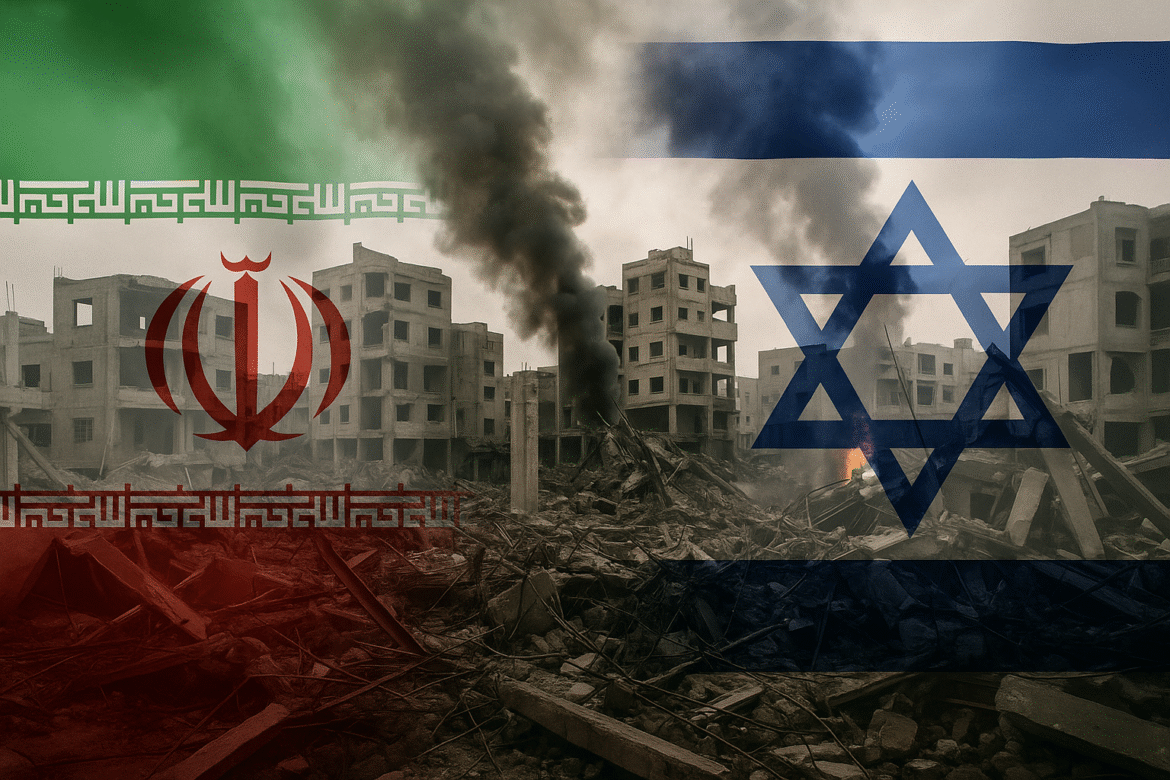
The escalation of tensions between Iran and Israel in the 2024-2025 period was not limited to indirect conflicts carried out through proxy actors, but for the first time in history, it turned into a direct and open military conflict between the two countries. While this conflict has seriously shaken the fragile security balances in the Middle East, it has had far-reaching consequences at the regional level, starting with Iran's internal political structure. The military, economic and social repercussions caused by the conflict were not limited to Iran and Israel; it also had noticeable effects on regional countries such as Türkiye, Iraq, Syria and Lebanon. At the same time, this crisis has created serious uncertainties for the Gulf countries and global energy markets, leading to fluctuations in oil and natural gas prices (Reuters, June 17, 2025).
This study aims to analyze the transformations in Iran's internal dynamics and the reflections of these transformations on neighboring countries by examining the Iran-Israel tension. The balance of power within the regime in Iran, social reactions, economic vulnerabilities and changes in security policies are the most important internal reflections of this conflict. On the other hand, the positions and measures taken by regional actors such as Türkiye in the face of this crisis should not only be evaluated at the foreign policy level, but also in terms of internal security, diplomacy and energy security.
2. Iran's Regime Security
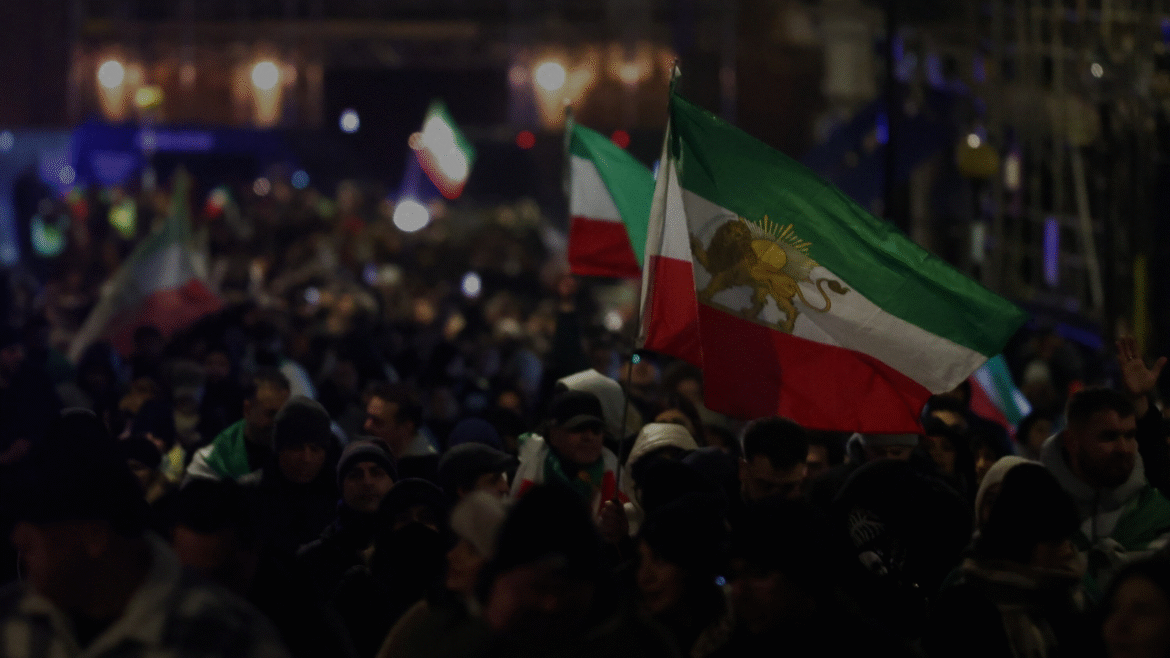
The Iranian regime has been using the external threat as a tool of internal management for many years. In particular, anti-Israel rhetoric is functionalized to keep the regime's doctrine of "protecting the revolution" alive. In every period when the Iran-Israel conflict escalates, the pressure mechanisms within the country harden at the same rate. The Revolutionary Guards, intelligence units and Basij forces are becoming more aggressive and increasing their repression not only against external threats, but also against the opposition. In this way, the pressures against the internal opposition on the grounds of security threats are increasing. This is supported by additional legal regulations and security measures to suppress demonstrations and protests. After the attacks that started in June 2025, the Revolutionary Guards and intelligence agencies carried out harsh interventions against the media, opposition circles and academics (Reuters, June 19, 2025). The Iran-Israel tension is used by the Tehran administration as a means of deepening the perception of external threats and uniting the people around the regime. This gives the regime room for maneuver, especially in reformist-conservative tensions. Historically, the social protests that increased after the 2022 Mahsa Amini events have been associated with Israel and Western countries. This statement, which came after the protests spread across the country, continued with Raisi blaming the hypocrisy of the West for the events that started after the death of 'Amini' (BBC, 20 September 2022)
It is increasingly common for the regime to use control of the judiciary and media as a means of repression against journalists, students, and activists who criticize the regime's judicial system. Even critical comments, especially about Israel, can be the subject of espionage charges. Iran has announced that it has executed three people it accuses of spying for the Israeli intelligence service MOSSAD. These individuals were accused of conducting cyber espionage activities in Iran and their death sentences were carried out after judicial processes. In addition, many people have been arrested in Iran on charges of being Mossad agents, and some have been sentenced to death (Anadolu Agency, 18 June 2025). The clerical regime in Iran has largely based its long-term existence on creating regional spheres of influence and shaping the region through proxy forces. In this process, Iran also considers the support, diplomatic protection or veto in the UN Security Council as a security shield in order not to be isolated in the international arena.
On the Israeli front, Prime Minister Benjamin Netanyahu's search for a "quick and decisive victory" in the operations against Iran, especially against the Ayatollah regime, draws attention. Netanyahu's strategy in this process is interpreted as a risky and ambitious move aimed at both restoring the regional balance of power and strengthening his domestic political position. However, whether this move will find a political response for Netanyahu will become clearer in the coming months.
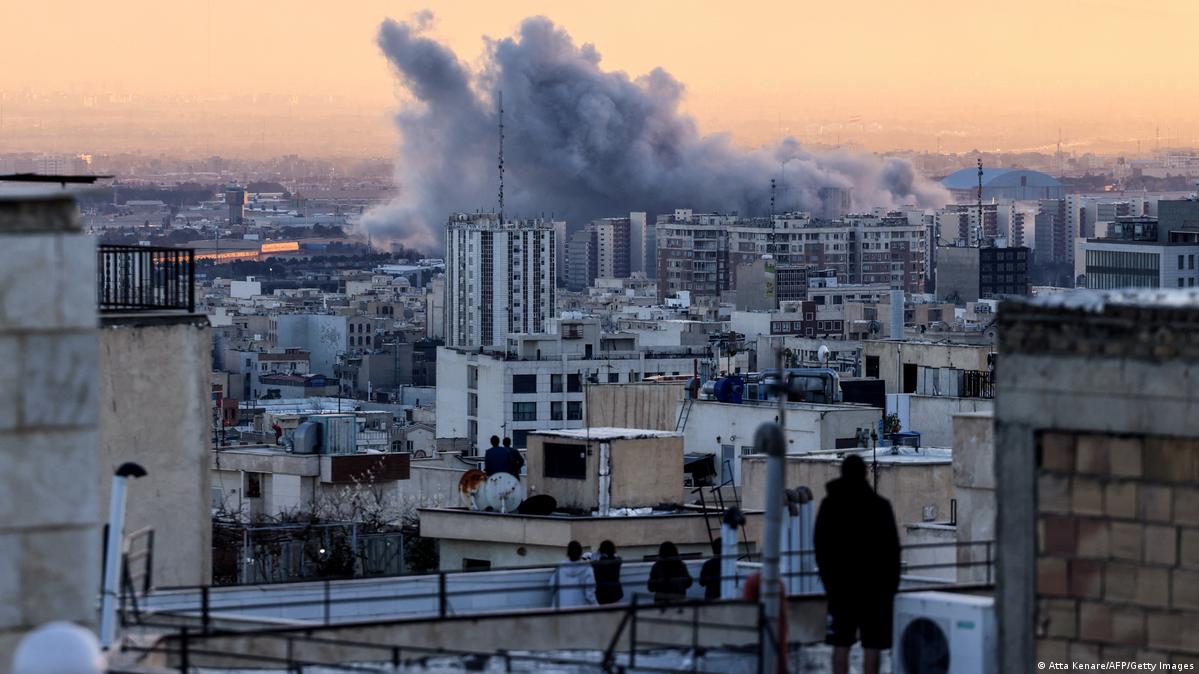
According to the analysis of the Iranian news agency IRAS, the attacks carried out by Israel in June 2025 against nuclear and military facilities in Natanz, Hamedan and Tabriz directly targeted Iran's strategic infrastructure. At the same time, targeted assassinations of scientists and senior military commanders have been considered part of a comprehensive strategy aimed at weakening Iran's intellectual capital and military decision-making capacity (IRAS, 2025). Israel's attacks revealed that Iran has serious weaknesses in both its air defense systems and intelligence infrastructure, and that deep infiltrations can be carried out at vital points of the country.
When we look at the scope of the attacks and targeted points, it is seen that senior executives, statesmen and high-ranking soldiers in Iran are directly targeted. This means that it is not only random or randomly selected targets, but on the contrary, critical names and centers determined as a result of in-depth and detailed intelligence work are attacked. Thus, it is revealed that Iran's intelligence agencies have significant weaknesses in both protecting against external threats and ensuring internal security. This weakness shows that there is a serious gap in the regime's security architecture; in particular, it shows that critical information and data leaks are used by foreign powers. The targeting of high-level figures also strengthens the possibility that there may be insider leakers or collaborators in intelligence services. In this context, the attacks not only cause physical damage but also trigger a deep crisis of confidence in the Iranian regime's intelligence security and critical decision-making mechanisms. (IRAS, 2025).
As a result, these weaknesses in Iran's security structure both shake the regime's internal political balances and significantly weaken its deterrence power in foreign policy. These weaknesses in the field of intelligence underscore the urgent need for reforms and security measures to improve Iran's defense capacity against similar attacks in the future.
3. Israel's Shaking Balances in Economy and Security
Israel's direct military conflicts with Iran have seriously affected not only regional stability but also the country's economy and social security perception. The high defense expenditures, damage to energy infrastructure and disruptions in supply chains caused by the war increase both short- and medium-term vulnerabilities in the Israeli economy. In this process, fluctuations in global energy markets also had a direct impact. Risks have increased for energy exporting countries, and costs have increased for importing countries. In the first week of the war, daily expenditures amounted to approximately $725 million, with attacks accounting for $593 million and defense and mobilization for $132 million (TRT Global, 2025).
Beyond these, the clashes have shaken the long-standing perception of Israel's internal security. The missile attack launched by Iran has made it clear that the Iron Dome air defense system, which has become the symbol of Israel, does not offer an absolute security shield. Although the system neutralized the threats, some attacks broke through the defense network and reached the country's territory, causing damage to both civilian habitats and military targets. This situation has created a serious sense of insecurity among the public. Evictions have been on the agenda in northern settlements, and public criticism of the government has increased (Reuters, 2025). News and reports in this field have called into question the system's claim of 'absolute security'. This perception of security vulnerability in the eyes of the society has led to the need to reshape Israel's domestic political atmosphere and defense strategies. In particular, it is necessary to diversify the defense infrastructure, increase civil defense capacities and develop a more comprehensive deterrence policy against external threats. The current crisis shows that it is not enough to invest only in military technologies, but also that it is essential to take a multi-layered security strategy, military deterrence, diplomacy and economic resilience measures.
4. Effects of the Israel-Iran War on Iran's Economy
The increasing tension in the region with the Iran-Israel war has deeply affected not only political balances but also economic stability. The conflicts in this sensitive geography, especially where energy corridors pass, have led to serious fluctuations in global energy markets, and experts emphasize that concerns about the security of natural gas and oil lines passing through Iran have caused sudden increases in prices, while disruptions in supply chains have increased the economic vulnerability of many countries. In this process, the uncertainty in energy supply has affected not only the countries of the region but also global markets. The repercussions of the conflict on energy markets are evident. Attacks on energy infrastructures that threaten security have triggered concerns about the Persian Gulf crossings. This situation had led to an increase in Brent oil prices to the $90-95 band (Al Jazeera, 2025).
Iran's economy has been fragile for many years under the influence of sanctions, regional isolation and chronic structural problems. However, as of the end of 2024, direct conflicts with Israel and subsequent regional tensions have dragged Iran into an increasingly pronounced war economy. Iran's tough stance in foreign policy and its anti-Israel actions further deepen the country's economic vulnerabilities. The Iranian economy, which has already been under heavy US sanctions for a long time, directly affects the daily life of the society, not just macroeconomic indicators, due to the threat of war and armament priorities.
The limited foreign exchange inflow and the difficulty of imports under the embargo led to a serious supply shortage in the domestic market. This, combined with the depreciation of the currency, dramatically reduced the purchasing power of Iranians and caused the middle class to become rapidly impoverished. What is even more striking is that the basic needs of the people's daily consumption have now turned into luxury items. In this economic environment, the government has been forced to reduce consumption subsidies and transfer state revenues to the war budget, further exacerbating inflationary pressure.
The exclusion of Iranian banks from international payment systems has made foreign trade almost impossible. Import restrictions on technology and energy sectors negatively impact production, particularly in critical areas such as refinery technology, electrical infrastructure, and medical devices. The increased security risk around the Strait of Hormuz has shifted the portability of Iranian oil to different channels, which has led to a decrease in oil export revenues.
Even before the bombings began, the Iranian economy was in serious decline. Six out of ten people of working age were unemployed. The inflation rate reached 35% last year. About 18% of the population lives below the poverty line. Despite being rich in energy resources, Iranian authorities are forced to use fuel oil, a low-quality refinery byproduct, in electricity generation. This indicates a serious structural energy crisis for a natural gas and oil exporting country (The Economist Farsi, 2025).
Aware of this situation, Israeli Prime Minister Benjamin Netanyahu has made not only military targets but also economic infrastructure a priority target in attacks against Iran. In all the attacks carried out so far, Israeli warplanes have hit two Iranian natural gas fields, several oil production facilities and an automobile factory (The Economist Farsi, 2025).
It is clear that these attacks aim to weaken the regime economically by targeting not only Iran's defense capacity but also the basic living resources of the people. The strategic rationale behind the airstrikes on Iran aligns with the core philosophy of international sanctions imposed on the country. The main purpose of these interventions is to limit public resources by reducing the Iranian government's tax revenues and thus disrupt its nuclear program. However, we should not forget the decisive role played by Iran's most important security wing, the Islamic Revolutionary Guard Corps, in the development of the nuclear program. The IRGC has established a largely opaque trade network outside the country's official economy, which turns economic gaps arising from sanctions into profits. This structure controls a significant portion of Iran's economy and limits the impact of foreign interventions. In the event of a renewed escalation of tensions between Iran and Israel, it is highly likely that one of Israel's primary targets will be the bases of the Revolutionary Guards. The bulk of these structures have already been severely damaged by previous attacks and are thought to be part of the IRGC's logistics and distribution network. The reconstruction of these military facilities will incur very high costs.
On the other hand, the oil sanctions imposed in the past could not completely stop the foreign trade of the Iranian economy, but only caused temporary slowdowns in export processes. Iranian actors have developed methods to continue their shipments in different ways during this period. Therefore, the effect of the sanctions has been limited and the system has not become completely inoperative.
In the midst of all these developments, the increasing inflation in the country and the difficulties in accessing basic necessities further increase the pressure on the people. Despite this, financing the institutions that ensure the security of the regime continues to be one of the priority expenditure items of the state. This shows that the people continue to bear the cost of the security apparatus indirectly despite the severe economic conditions.
5. Regional Blocs
The regional balances in the Middle East, which have become increasingly evident in recent years, are being reshaped around two main axes. This structuring is determined not only by the foreign policy preferences of states, but also by their ideological orientations, security priorities and relations with global actors.
On the one hand, there is a bloc that prioritizes stability, economic development and technological transformation and cooperates politically, militarily and economically with the West. This bloc includes countries such as Israel, the United Arab Emirates (UAE), Saudi Arabia, Egypt and Jordan. Israel's high-tech capacity, the UAE's financial power, Saudi Arabia's energy resources, and Egypt's geopolitical position make this alliance effective on the regional level. This bloc focuses on limiting Iran's regional influence and maintaining a harmonious order with global capital. For the Gulf countries, this choice is considered as a guarantee of regime security and economic stability.
On the other hand, there is a bloc of organizations supported by the Islamic Republic of Iran on the opposite side. This front is shaped around the discourse of opposing Western interventions in the region and Israel's presence. Among the actors that Iran directly or indirectly supports are Hezbollah in Lebanon, Hamas and Islamic Jihad in Gaza, the Houthis in Yemen and various Shiite militia groups in Iraq. This structure acts not only on a military but also on an ideological and religious unity.
Iran's central role in this structure manifests itself not only through proxy forces but also through soft power strategies, media networks, and the export of political ideology. In particular, the Jerusalem issue, anti-Western sentiment and anti-Zionist discourse function as the common ground of this bloc. The resistance front pursues a strategy that targets not only Israel but also all regimes that cooperate with it.
In the face of the proxy forces supported by the Islamic Republic of Iran, it is seen that Israel has developed indirect or direct relations with various actors in order to strengthen its regional influence and achieve its strategic goals. Israel is trying to turn the balance in the region in its favor through some groups and political actors that it officially supports or cooperates covertly. For example, Israel's strategic approaches towards Kurdish groups, especially in the northern and eastern regions, in the Syrian civil war are aimed at limiting the influence of Iran and Hezbollah in Syria. Likewise, International Crisis Group reports state that intelligence relations established with local tribes and militias in Iraq and Syria constitute Israel's counterforce in the region (International Crisis Group, 2024). Israel's efforts to contact and cooperate with different Palestinian actors such as Fatah in the West Bank are also known. In regional energy policies, Israel pursues a strategy of creating a military and economic balance against Iran-backed Hezbollah by allying with Lebanon, the Greek Cypriot Administration, and Greece in the Eastern Mediterranean (Carnegie Endowment, 2023). These alliances are vital for the control and security of regional energy resources.
The main difference between these two blocs is not only who is positioned on whose side. One side states that it advocates for economic integration, energy security and an order in harmony with global capital. The other side, on the other hand, says that it is fighting a struggle based on maintaining the regional balance of power, religious-national mission and anti-imperialist resistance. The escalation of the Iran-Israel conflict has made the fragile balance between these two axes even more visible and forced the actors trying to remain neutral to take a position. For regional powers like Türkiye, this polarization poses both opportunities and serious risks. In this context, the increase in Iran's influence over its proxy forces or the expansion of Israel's economic-political influence in the region directly affects not only these two countries, but the entire Middle East security system.
The regional effects of the Iran-Israel tension have been seen to reshape not only the actors in direct conflict but also the foreign policy and security structure of neighboring countries. In this context, considering Türkiye’s position, historical background, foreign policy and regional influence capacity, it has been seen that it stands out as an important regional balance element although it is not a direct party to the conflict. Türkiye has emphasized that it is an actor ready to mediate by avoiding being a direct party to the conflict.
The most important factor that we should not forget is that Türkiye is located in the center of the Middle East due to its geographical location. As a neighbor to fragile state structures such as Syria and Iraq, where violence is frequently experienced, it is one of the countries that can feel the direct impact of all kinds of military interventions and violence in the region. In periods of intensifying conflicts, Türkiye often directly calls to the parties to de-escalate tensions and stands out with statements that prioritize diplomacy. In a statement issued by the Turkish Ministry of Foreign Affairs dated 13 June 2025, Israel's air operations against Iran were described as a “provocation in clear violation of international law” and condemned them (Ministry of Foreign Affairs, 13 June 2025).
6. Conclusion
The conflict between Iran and Israel is not only a struggle for interests between the two states, but also a reflection of deeper and structural problems that reveal the fragile balances of the regional and global order. Iran's ideologically based proxy war strategy is dragging the region into sustainable chaos, not stability. On the other hand, Israel's military superiority and tactical gains through intelligence operations are not enough to build regional security in the long run. There is no winner in this conflict. On the contrary, each new attack becomes the trigger of a new crisis in the Middle East, while the safety of civilians is lost in the geopolitical calculations of global actors.
Many military moves carried out by Israel under the name of security strategy coincide with actions that challenge and even openly violate international law. This situation shows that a new security structure is taking shape, in which legal norms in the region are gradually eroded and non-state actors have become essential elements of war.
On the other hand, Iran's military capacity and weaknesses in its intelligence structure, combined with Israel's aggressive security approach, make it clear that both countries are investing in mutual attrition strategies rather than a long-term vision of peace. The international community, on the other hand, mostly evaluates this conflict only in the context of the balance of power, and sees the humanitarian crises experienced by civilians as a marginal and secondary issue. However, the Iran-Israel tension is both a result and a permanent trigger of the chronic insecurity environment in the Middle East.
In this context, Türkiye’s position should also be carefully evaluated. Although it has cultural and historical ties with Iran, Türkiye is a member of NATO and has strong strategic relations with the West. Although Ankara is not a direct party, it has sometimes assumed the role of mediator thanks to the balance policy it has followed in the face of the tension between Iran and Israel, and has preferred to remain neutral and cautious from time to time. However, if the recurrence and expansion of the conflicts directly or indirectly affect Türkiye’s security and energy fields, it may be inevitable for Ankara to take a more active and guiding position. An element that is among the security concerns for Türkiye is Shiite militia forces and proxy actors supported by Iran. It directly clashes with Türkiye’s security and strategic interests in Syria, Iraq and the Eastern Mediterranean. For Israel, Türkiye’s attitude is neither fully Israel's friend nor enemy. While it is an element of uncertainty for Israel, it is also a pragmatic advantage for limiting conflicts in the region. Although Türkiye’s not being directly on the side of Iran makes regional balances more complicated for Israel, it is an important advantage for Israel that Ankara does not completely break relations with Israel. Although Türkiye has had a bumpy relationship with Israel in the past, cooperation continues, especially in economic and technological fields. Türkiye is trying to protect regional stability and its own national interests by following a neutral and balanced position in the tension between Iran and Israel.
In the final analysis, the Iran-Israel tension continues to exist as a geopolitical fault line in which not only the security structure of these two countries but also the Middle East, the legitimacy limits of international law and the life guarantees of the peoples of the region are under threat. The establishment of lasting peace can only be possible through the silence of the guns, but also through a radical transformation in the security understanding and foreign policy priorities of regional actors. Reading this conflict not only at the level of military moves or political discourses, but also with its historical, diplomatic and legal layers is a necessary approach in terms of understanding the crisis correctly, if not a solution.
References
Reuters. (2025, June 17). Israel-Iran war already takes toll on oil, gas sector. Reuters. https://www.reuters.com/markets/commodities/israel-iran-war-already-takes-toll-oil-gas-sector-2025-06-17
Reuters. (2025, June 19). Turkey has increased border security amid Iran-Israel conflict, sees no migrant influx. Reuters. https://www.reuters.com/world/middle-east/turkey-has-increased-border-security-amid-iran-israel-conflict-sees-no-migrant-2025-06-19
BBC. (2025, September 20). https://www.bbc.com/turkce/articles/cgrdnv74zr8o
IRAS. (2025, June 20). حمله ژوئن ۲۰۲۵ اسرائیل به ایران و پیامدهای راهبردی آن IRAS – Institute for Iran and Eurasia. https://www.iras.ir/حمله-ژوئن-2025-اسرائیل-به-ایران-و-پیامدها/
Anadolu Ajansı. (2025, June 18). İran'da Mossad ajanı oldukları suçlamasıyla birçok kişi tutuklandı. https://www.aa.com.tr/tr/dunya/iranda-mossad-ajani-olduklari-suclamasiyla-bircok-kisi-tutuklandi/3603390
TRT Global, 2025 https://trt.global/world/article/d4fd7043661a
Al Jazeera, 2025 https://www.aljazeera.com/economy/2025/6/16/what-would-an-israel-iran-war-mean-for-the-global-economy
IRAS. (2025, June 20). IRAS – Institute for Iran and Eurasia. https://www.iras.ir/حمله-ژوئن-2025-اسرائیل-به-ایران-و-پیامدها/
The Economist Farsi. (2025, July). Inside Iran’s war economy. https://www.economistfarsi.com/2025/07/inside-iran-war-economy/
The Economist Farsi. (2025, July). Inside Iran’s war economy. https://www.economistfarsi.com/2025/07/inside-iran-war-economy/
(Dışişleri Bakanlığı, 2025, June 13)
https://www.mfa.gov.tr/no_-121_-israil-in-iran-a-yonelik-saldirisi-hk.en.mfa?utm