
The Iranian People Between Two Fires: External Intervention and Internal Pressure
1. Introduction
When assessing the joint military operation launched by the US and Israel against Iran, I believe we must first focus on the justification for this intervention. Many experts point out that these military actions lack sufficient legal and strategic justification. I agree with these views. However, in my assessment, from Washington's perspective, the process has been built on a narrative of inevitability beyond a certain point. In particular, Donald Trump's harsh warnings against the Iranian regime have shaped the normative framework for this intervention.
Trump's so-called “red lines” for the Iranian leadership were the cessation of violence against protesters, the release of detainees, and the consideration of regime change. In addition, Iran's efforts to develop nuclear capabilities, its ballistic missile programme, and its support for regional proxy forces were also listed among the main justifications for intervention (International Atomic Energy Agency, 2025). In this context, I believe that military intervention was legitimised not only through the discourse of human rights but also through the paradigm of security and deterrence. In my own analysis, I interpret the Trump administration's “red lines” as a prelude to military escalation rather than a diplomatic tool.
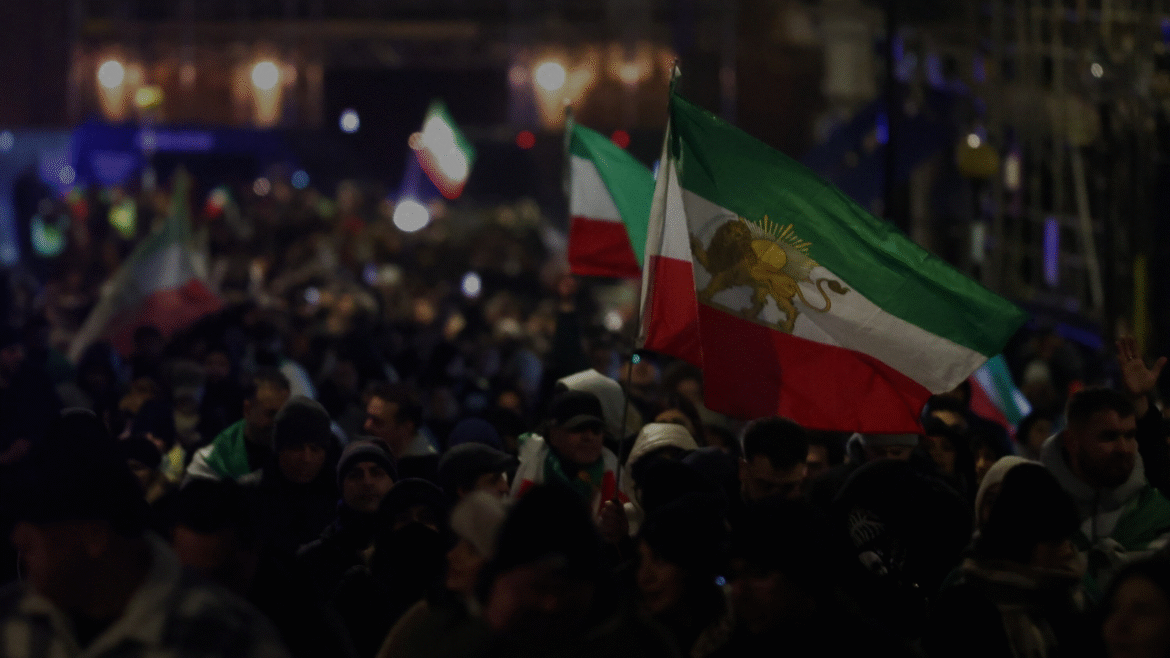
Instead of heeding these “red lines”, the regime chose to suppress the protests with harsh methods, resulting in the deaths of thousands of people and the cutting off of internet access, isolating the country from the outside world (Amnesty International, 2025). This situation demonstrates that the Iranian people are experiencing a deep conflict not only with external military pressure but also with their own government.
However, it would be incorrect to say that diplomatic contacts had completely ended before the military intervention took place. It is known that indirect negotiations on the nuclear programme and the easing of sanctions continued, with partial progress made on some technical issues. However, mutual distrust between the parties and disagreements over the scope of sanctions led to the process becoming deadlocked (Crisis Group, 2026). The use of military options while the ground for negotiation had not yet completely disappeared further deepened the fragility of the diplomatic process.
The argument by the Trump administration's advisors that failure to carry out the threats would damage the US's global credibility has, in my view, been one of the most decisive factors in the intervention. In this context, Trump's transformation of his rhetoric into an actual military move carries a message not only to Iran but also to the US's other rivals.
Looking at the targets of the operation, attacks based on highly sensitive intelligence targeting Iran's security and political infrastructure are noteworthy. This indicates that the military intervention is not merely a limited deterrence operation but part of a broader strategy aimed at eroding the regime's institutional capacity. It appears to be a war of indefinite duration and uncertain outcome.
2. The Collapse of Theocratic Authority: The Risk of Regional Expansion and the Role of Proxy Forces
I consider the assassination of Ayatollah Ali Khamenei alongside his senior staff to be the greatest turning point in the history of the Islamic Republic of Iran. This event is not merely the loss of a leader; it signifies the decapitation of the regime's entire security architecture and ideological centre. In my own analysis, I attribute the regime's difficulty in making new appointments following this move to its efforts to purge intelligence networks that have infiltrated its institutions. At the same time, the regime is focused on the internal spies who enabled these attacks, which resulted in the deaths of senior officials.
The loss of a figure like Khamenei is, for Tehran, a matter of theocratic honour beyond a rational military response. I predict that from this point on, Iran will devise a comprehensive retaliation not only against military targets but also against the symbolic and strategic assets of the US and Israel in the region under the rhetoric of “revenge”. In this context, it is foreseeable that Iran's first military response will be directed at US bases in the region and Israel. Targeting the headquarters of the US Fifth Fleet in Bahrain, Al Udeid Air Base in Qatar, Al Dafra in the United Arab Emirates, and Ali Al Salem base in Kuwait has the potential to rapidly expand the geographical boundaries of the conflict. This situation indicates that the war will not remain confined to just two actors, but could create a fault line affecting the entire Gulf security architecture. Considering the possibility of more direct involvement by pro-Iranian structures in Yemen and Iraq, I view the risk of escalation as quite high.
When assessing possible scenarios, I believe that Iran will not rely solely on its conventional military capabilities. On the contrary, it is likely to more actively deploy proxy forces as part of an asymmetric and hybrid warfare strategy. Militias operating in Iraq, Hezbollah's announcement that it will target US facilities, and the possibility that the Yemen-based Houthi movement will resume attacks on maritime trade routes in the Red Sea indicate that the conflict could turn into a multi-layered security crisis. I interpret this scenario not merely as the risk of an inter-state war, but as a scenario in which civilian life, energy, and security are completely eliminated across a geography stretching from Lebanon to Yemen. Therefore, I believe that the current conflicts constitute a structural regional crisis that could rapidly escalate, rather than a controllable military tension.
Consequently, I assess the situation the region has entered following Khamenei's death as an irreversible spiral of escalation. The US and Israel's move has weakened the regime. However, the enormous power vacuum it has created and the accompanying desire for revenge could place the region's civilian populations and international security under a greater threat than ever before. The humanitarian and regional cost of this operation, presented as a military success, will be much heavier than the targeted regime change scenarios.
3. The Human Dimension and Universal Dynamics of Conflicts
Although official statements claim that operations are conducted with “surgical precision”, data from Farsi news sources that I have followed undermines this claim. In particular, the attack on a girls' school in the city of Minab, in the province of Hormozgan, which resulted in the loss of over a hundred students' lives, is one of the most painful examples of the damage military violence inflicts on the civilian fabric.
In my assessment, this strategy of the US and Israel targets not only the regime's objectives but also, directly or indirectly, the fundamental areas of life in Iranian society. Hospitals and schools are among the most important examples we have seen. Examples such as the attacks on Evin Prison reveal that military violence carried out under the pretext of “humanitarian aid” or “liberation” actually creates new human rights violations (HRW, 2026).
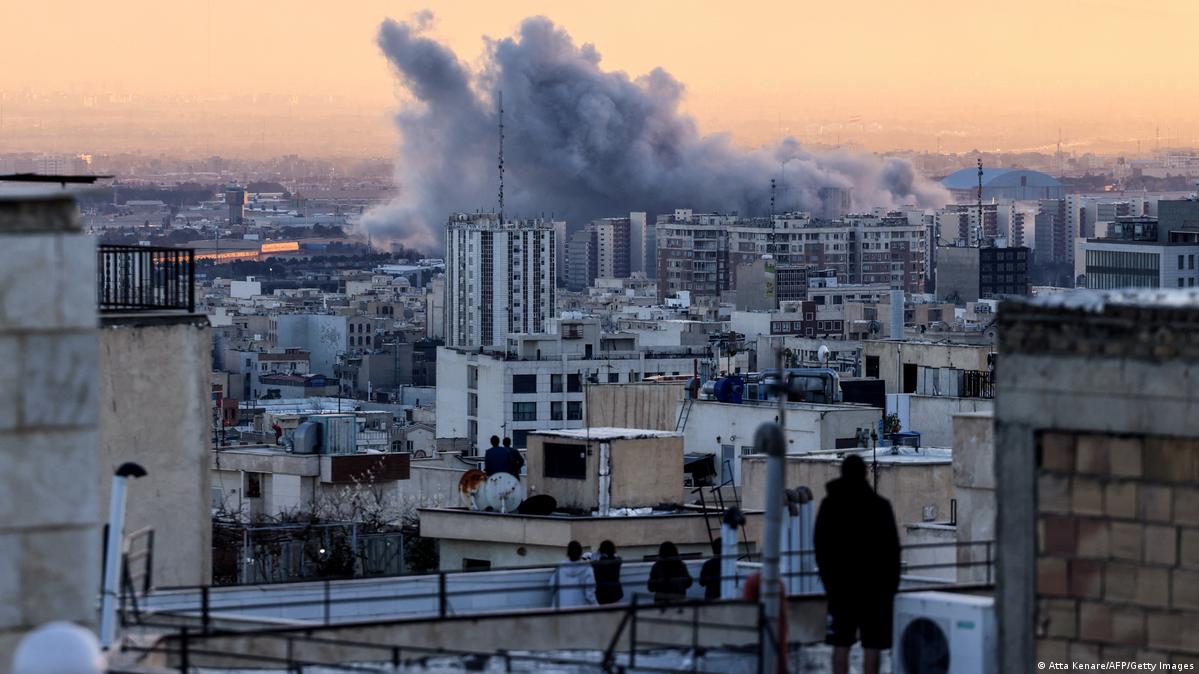
The attacks intensified in cities such as Tehran, Sanandaj, Mahabad, and Urmia, causing serious explosions in civilian areas as well as infrastructure. According to the Iranian Red Crescent, at least 555 people have been reported killed in joint US and Israeli attacks.
The Iran-US-Israel conflict should not be viewed merely as a regional armed crisis. The conflict represents a geopolitical breaking point that could have profound effects on global security, energy markets, financial system dynamics, and international supply chains. Developments in the Strait of Hormuz, in particular, are heightening concerns about the crisis's global economic impact. Oil prices have risen by 6 per cent on international markets due to increased geopolitical risks and supply concerns.[3] It should be remembered that the Strait of Hormuz is a critical waterway carrying approximately 20 per cent of global oil and LNG trade.[4] Oil and LNG prices have risen on global markets due to the blockage of this waterway.
Another important issue is delays in the global supply chain. Conflicts are causing uncertainty in maritime transport routes and increases in insurance costs, thereby increasing the risk of delays and higher costs in global supply chains. Delivery times in global trade are lengthening and costs are rising.
4. Assessment from the Perspective of International Law
The United Nations Charter generally prohibits states from using armed force, but Article 51 grants states the right to legitimate self-defence against an armed attack. However, this right is subject to strict international law criteria. The use of force must comply with the principles of necessity and proportionality.
The principle of necessity determines that a state's right to use force is limited to situations where it is the only means of preventing an armed attack, and this right is restricted to cases where the attack is imminent and unavoidable. The principle of proportionality requires that the force used be commensurate with the scale of the attack. Within this framework, the theory of “pre-emptive self-defence” only comes into play in exceptional and serious threat situations.
Under the current conditions of the US-Iran conflict, it can be assumed that a nuclear attack by Iran would constitute an armed attack of such magnitude as to trigger the right to legitimate defence. However, the US use of force against Iran does not meet the necessity criterion, and this can be explained by two reasons:
1. No imminent threat: Iran does not currently possess operational nuclear weapons and has not explicitly declared any intention to carry out such an attack. Given the fact that the US attacks in June largely destroyed Iran's nuclear capacity, the assumption that Iran could carry out a nuclear attack in the short term is not legally or strategically convincing.
2. The existence of diplomatic channels: Diplomatic negotiations were still ongoing before the war and during its early days. This situation demonstrates that non-violent alternatives to the use of force have not been exhausted. The realisation that the negotiations were still inconclusive does not strengthen the US's claim of legitimate defence; even negotiations that may fail cannot in themselves constitute grounds for legitimate defence. Current reports indicate that the Iranian side was engaged in serious negotiation efforts and was not merely going through the motions.
Therefore, the attack launched by the US against Iran has no legal basis under international law as “pre-emptive self-defence”. For the use of force to be considered self-defence, Iran must both possess nuclear capability and clearly link this capability to an intention to attack the US. The current situation shows that these conditions are not met.
Consequently, the use of force in the US-Iran conflict continues to be a subject of serious legal and diplomatic debate in terms of international law and self-defence criteria. Therefore, continuing diplomatic solutions and prioritising alternative non-violent measures is of critical importance, both legally and strategically.
The attacks by the US and Israel against Iran violate international law. According to the United Nations (UN) Charter, the use of force against a state is prohibited, with the exceptions of legitimate self-defence and Security Council authorisations. Legitimate self-defence must be in response to an imminent threat, and there is no indication of such a threat to the US or Israel. Similarly, there is no authorisation from the Security Council. Therefore, this situation not only violates the UN Charter but also constitutes the crime of aggression, as defined by the UN General Assembly and prohibited under traditional international law. [6] Iran responded to the US threats in a letter to the UN Secretary-General, stating that it would respond decisively and proportionately in self-defence if attacked, and emphasising that all bases, facilities and assets of hostile forces in the region would constitute legitimate targets.[7]
5. Conclusion
In criticising external intervention in this article, I am by no means overlooking the systematic violence perpetrated by the Iranian regime against its own people; on the contrary, I believe that these two phenomena are not independent of each other, but rather intertwined processes. The repressive policies implemented by the regime internally and the military interventions from outside, although based on different justifications, produce similar humanitarian devastation in terms of their consequences. Internally, there are interventions by security forces, violent incidents in the streets, and mass arrests; externally, there are air strikes and retaliatory attacks. Regardless of who carries them out and for what reasons, these actions fundamentally result in the loss of civilian lives, injuries, trauma, and the forced displacement of people from their lands.
For me, the most striking aspect of the issue lies precisely here. War is destructive in both its forms. Both internal state repression and international military intervention ultimately restrict the living space of innocent people, eliminate their sense of security, and tear apart the social fabric. For this reason, I find it insufficient to discuss the crisis solely in terms of strategic gains or geopolitical balance. What should really be seen is that the common result of violence, both internal and external, is a human cost.
As a researcher closely following the demands for freedom in Iran and the state's harsh response to these demands, I believe that the regime's bloody crackdown on the protests, resulting in thousands of civilian casualties, has triggered the most serious social rupture since the revolution. However, I believe a clear distinction must be made here. Neither external air strikes nor internal street movements alone are sufficient to dismantle this political structure. In my view, the decisive factors are the extent of economic exhaustion and the deepening crisis of confidence within the ruling echelons. In particular, the disintegration and mutual distrust within the political/regime structures pose a greater threat to the regime's long-term stability than external intervention.
I do not share the optimistic view that external military intervention would directly open up a democratic space for the Iranian people. On the contrary, I observe that military operations strengthen the regime's “external enemy” rhetoric and can further legitimise internal repression through this rhetoric. This situation pushes the civil opposition into a more fragile position in terms of both security and legitimacy. Furthermore, the removal of the current regime's personnel as a result of external intervention could also bring about the emergence of a harsher and more security-oriented approach to governance. I believe this possibility should not be overlooked.
I sincerely desire for the Iranian people to achieve a more free, accountable and internationally compatible administration. However, I do not believe that regime change will occur in the short term through external military intervention. Historical experience shows that external interventions have not always produced stable and democratic results; on the contrary, they have often created new power vacuums and uncertainties.
Consequently, in my opinion, the key factors that will determine the future of the Islamic Republic of Iran are not the intensity of military operations, but the erosion of economic sustainability and the depth of the internal political legitimacy crisis. External intervention may accelerate the process, but the dynamics that will ultimately determine the regime's fate will be shaped by the internal structure of Iranian society and the internal balances of the state apparatus.
References:
International Atomic Energy Agency (IAEA). (2025). Verification and Monitoring in Iran Report.
Amnesty International. (2025). Iran: Brutal crackdown on protesters.
Crisis Group. (2026). Iran Nuclear Talks and Regional Escalation Briefing.
Human Rights Watch (2026). “US/Israel/Iran: All Parties Should Respect Laws of War.”
[1] https://www.aa.com.tr/tr/dunya/unesco-irandaki-okul-saldirisi-uluslararasi-hukukun-ihlali/3846488
[2] https://iranwire.com/fa/news-1/149728
[3]https://www.aa.com.tr/tr/ekonomi/petrol-fiyatlari-orta-dogudaki-catismalarin-etkisiyle-yuzde-6-artti/3848039#:~:text=D%C3%BCn%2079%2C85%20dolara%20kadar,76%2C08%20dolardan%20al%C4%B1c%C4%B1%20buldu.
[4] https://www.middleeastmonitor.com/20250622-iran-israel-war-an-economic-storm-for-america-and-the-world
[5] https://legal.un.org/repertory/art51.shtml
[6] https://legal.un.org/repertory/art2/english/rep_supp7_vol1_art2_4.pdf
[7] https://www.justsecurity.org/wp-content/uploads/2026/02/JS-file-iran-mission-to-the-un-letter-02-19-26.pdf
[8] https://www.bbc.com/turkce/articles/cqj27w4q5pyo