
The 19 March Operation and Loss of Trust
Summary
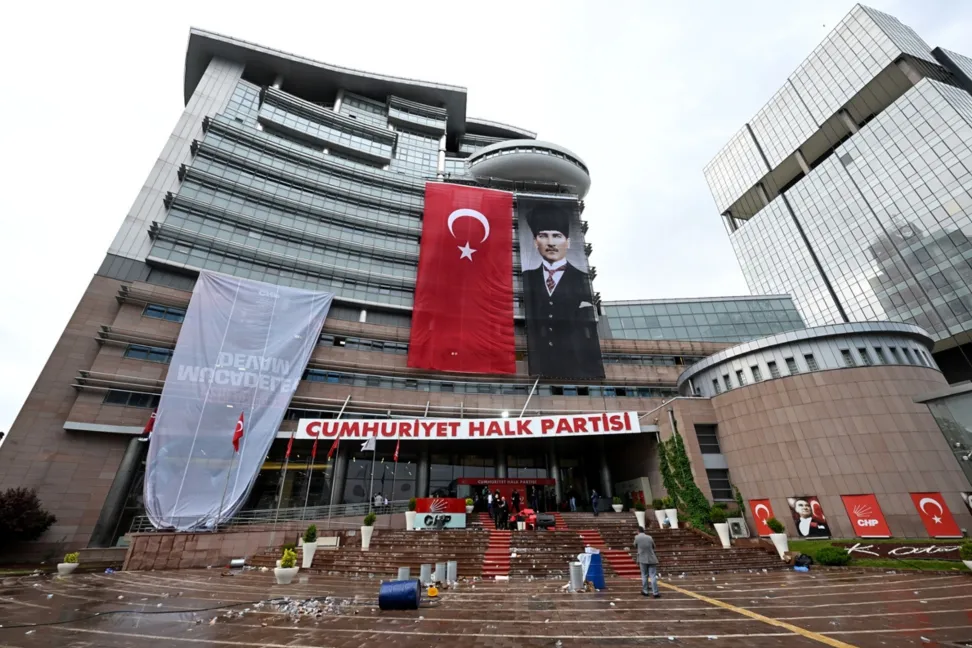
In my previously published article titled "Assessment of the Situation in Türkiye Following the 19 March 2025 Operation," I analysed in detail the situation that emerged in Türkiye after the 19 March Operation, focusing particularly on its economic consequences. This article, however, deals more with the developments and their consequences that have occurred in the intervening period. The negative impact of the loss of confidence and uncertainty caused by the operation on economic indicators is discussed in light of the data.
It has been emphasised that political tensions must be resolved in order to achieve sustainable recovery. While the instability caused by the operation at home has not yet subsided, there are concerns that the outbreak of war between Israel and Iran abroad will further deepen the crisis.
The 19 March Operation and Loss of Trust
I. Introduction
In Türkiye, the gains made in tackling the crisis following the 19 March 2025 operation have been wiped out, and the process has almost returned to square one. Consolidation among opposition parties at the grassroots level is increasing day by day. The resulting loss of confidence is leading to foreign outflows and local investors fleeing the country, thus deepening the economic crisis.
Minister of Treasury and Finance Mehmet Şimşek and the Central Bank are being criticised for the policies implemented and are being held solely responsible for the economic crisis in the country. However, the reason for the deepening of the crisis is entirely due to the destruction of the climate of trust as a result of the politically motivated 19 March operation, coupled with the deterioration of expectations following the external shock caused by the recent Iran-Israel conflict.
II. Shortcomings of the Rational Economic Policy
It is true that the programme currently being implemented has its shortcomings. For example; insufficient emphasis on the production side, opportunistic pricing reaching excessive levels due to inadequate oversight, failure to achieve savings in the public sector, Türkiye losing its competitive edge in foreign markets as a result of the excessive appreciation of the Turkish Lira, failure to achieve independence for the Central Bank, failure to amend the public procurement law, failure to ground Turkish Statistical Institute’s (TÜİK) data in reality, and so on. The country's build-operate-transfer (BOT) model continues to be a significant black hole.
The Medium-Term Plan (MTP) prepared by the Presidency of Strategy and Budget foresees that 328 billion TL will be paid for roads, bridges and tunnels built under the Build-Operate-Transfer (BOT) model for the 2025-2027 period, and 94.6 billion TL for 2025 alone. People's Gardens (Millet Bahçeleri) are another source of waste. In the first five months of 2025, 1.9 billion TL of public funds were used for People's Gardens. Due to the loss of confidence, there is no direct investment from abroad, and what little there is is fleeing. Domestic production facilities are also moving abroad due to high costs. For example, many companies in the textile sector have moved their factories to other countries. Yeşim Textile and Eroğlu Textile are just two of these companies. Looking solely at financing costs, a one-year loan with a 55% interest rate and quarterly interest payments is estimated to cost the company nearly 74%. For these reasons, the capacity utilisation rate in the textile sector, for example, has hit a low of 68.5% as of May 2025.
III. Hot Money Flow
Hot money flow has also been adversely affected. Carry trade positions exceeding $35 billion declined to $20 billion following the 19 March operation. Very short-term entries have gained prominence in carry trade. For example, those who entered on Thursday exit on Monday with a 3-day swap interest gain. In fact, the Central Bank of the Republic of Türkiye's (CBRT) positive real interest rate policy supports carry trade profits and keeps interest in carry trade alive.
IV. Reserves of the CBRT
Between 18 March 2025 and 6 May 2025, there was a loss of $57 billion in reserves. In fact, this development is largely the result of foreign capital outflows due to the loss of confidence caused by the 19 March operation and an increase in dollar substitution domestically. Of course, dollar sales have also taken place in interventions made in an effort to maintain the exchange rate.
Towards the end of May 2025, the slowdown in foreign exchange demand resulting from the easing of the foreign capital outflow wave provided the Central Bank with an opportunity to rebuild its reserves. The ongoing decline in FX-Protected Deposit (KKM) accounts is contributing to this process. Central Bank Governor Fatih Karahan stated that the damage caused by KKM accounts, implemented to prevent dollarisation, amounted to 833 billion TL. KKM accounts, which peaked at 3.4 trillion TL on 18 August 2023, continue to decline. As of 30 May, the balance stood at 576.2 billion TL.
Net reserves excluding swap fell to $13.8 billion in the week of 2 May 2025; they rose to $18.1 billion on 12 May 2025, $20.4 billion in the week of 16 May, $28.4 billion in the week of 23 May, and $32.5 billion in the week of 5 June. To curb the decline in reserves, the Central Bank raised the mandatory conversion rate on foreign exchange inflows from exporters from 25 per cent to 35 per cent, effective from 5 May 2025 to 31 July 2025.
V. Interest Rate Hike and Stagnation
When inflation is demand-driven, interest rate hikes are necessary. However, it is also true that interest rate hikes can push the economy into stagnation. Indeed, this has been a concern in Türkiye. According to TÜİK's data, GDP grew by 2 per cent year-on-year in the first quarter of 2025. However, while growth was +0.3 per cent in education, health and social services, +1.3 per cent in the service sector, +6.1 per cent in information and communication, and +7.3 per cent in construction, it was -2.4 per cent in manufacturing, -2 per cent in agriculture and -1.8 per cent in industry. It is stated that the amount of land cultivated in agriculture fell from 23 million hectares to 20 million hectares. The fact that growth in agriculture and industry is in negative territory is worrying. The impact of the 19 March operation will only be seen from the second quarter onwards. A further slowdown is expected in the second quarter of 2025.
Rising costs are pushing companies into a tight spot. The number of companies declaring bankruptcy and going bankrupt is steadily increasing. Throughout 2024, the number of companies declaring bankruptcy rose to 1,723. Bankruptcy rulings were issued for 132 companies. In the first four months of 2025, the number of companies going bankrupt was 53. According to TÜİK Labour Force Statistics, the broad definition of unemployment rose to 32.2 per cent as of April 2025. Confederation of Progressive Trade Unions of Türkiye Research Center (DİSK-AR) stated that the actual number of unemployed reached 13 million. This development in the employment sector is another indicator of stagnation.
VI. The Treasury's Interest Burden
The increase in interest rates is also increasing the Treasury's interest burden. While the state's interest expenditures were 142.4 billion TL in 2020, they rose to 1.35 trillion in 2024. A total of 2.7 trillion TL was spent on interest over the five years between 2020 and 2024, and the budget's interest burden reached 545 billion TL in the first quarter of 2025. As of May 2025, the real interest rate paid on public securities is around 10 per cent.
The Ministry of Treasury and Finance borrowed 97.9 billion TL in its three bond issues on 10 June 2025. The simple interest rate averaged 44.5 per cent in the bond auction, while the fixed coupon auction yielded 34.85 per cent.
VII. Credit Guarantee Fund
In response to the anticipated slowdown in growth, following the Central Bank's second Inflation Report announcement, it was announced that the Credit Guarantee Fund (KGF) would be reactivated. The Fund aims to support access to finance by acting as a guarantor for SMEs and non-SME businesses that are unable to obtain credit due to insufficient collateral. The KGF package is limited in size because excessive credit growth would lead to monetary expansion, which would harm the disinflation process. The KGF guarantees up to 80 per cent of the loan. The Credit Guarantee Fund was established with a capital of TL 278,438,892 through the joint participation of TOBB, KOSGEB, TESK, TOSYÖV, MEKSA and 21 banks. It is counter-guaranteed by institutions such as the Treasury, the EUR European Investment Fund and BTC Co.
VIII. Turkish Debt Capital Market (DCM)
The Turkish Debt Capital Market holds a significant place in investment banking. The DCM is where companies or governments borrow and sell debt to raise capital or make a profit. Despite instability in Türkiye's domestic market and global fluctuations caused by the US increasing its tariffs, the DCM continues to grow. The market is expected to exceed $500 billion in 2025-2026. In 2025, 76.5 per cent of total DCM issuances were in Turkish lira, with the remainder largely denominated in US dollars.
IX. Disinflation
Low global oil prices supported the disinflation process. The tightening of monetary policy due to the crisis of 19 March limited the increase in commodity prices. As a result, disinflation became apparent in TÜİK's controversial inflation figures. The year-end TÜİK-CPI is expected to be around 30 per cent, provided there is no new crisis. If monthly inflation remains at 1.65 per cent after May, the target of 29 per cent could be achieved. However, even if disinflation is achieved, a reduction in interest rates is risky, as slowing or even halting foreign exchange inflows would be negatively affected by a possible interest rate cut. Türkiye, however, has a great need for this foreign exchange.
X. Contradiction Among the Objectives of the Rational Economic Policy
The adopted ‘rational economic policy’ approach must address issues of price stability, growth, employment, budget balance and current account balance. However, efforts to correct one issue may adversely affect another target. For example, curbing demand to achieve price stability requires raising interest rates. However, this approach negatively impacts growth and unemployment rates.
The Turkish Lira has become excessively overvalued as a result of not allowing its relative purchasing power parity to increase. This situation has negatively affected exports and, consequently, foreign trade and the current account balance, as products subject to export have lost their competitive edge in foreign markets. In the first quarter of 2025, exports of goods and services decreased by 0.01 per cent, while imports increased by 3 per cent. In an environment where fiscal discipline is essential to curb budget deficits and demand, waste in the public sector in Türkiye cannot be prevented.
While the long-standing fight against inflation had begun to yield positive results, the 19 March operation, widely perceived as being carried out for purely political reasons, wiped out all the gains. All the sacrifices the society had to endure have been in vain.
XI. Conclusion
Unless political tensions subside and progress is made on issues of rights, justice, democracy and freedom, it will not be possible to achieve sustainable economic improvement. A decline in interest rates can only be achieved through continued disinflation. Preventing reserve losses can only be achieved by addressing the underlying causes of foreign exchange demand. This, in turn, depends on the establishment of political stability and the improvement of the climate of confidence. The Credit Default Swap (CDS) rate, which was below 300 before the operation, rose above 300 after the operation, reaching 371 basis points on 11 April 2025. On 14 June 2025, the 5-year CDS point had fallen to 291 basis points. The high CDS point indicates that an environment of trust has not yet been established outside the country. There are concerns that the Israel-Iran war, which broke out on 13 June 2025, will raise the CDS point as well as oil prices. A rate cut is expected from the Central Bank. However, while the political crisis and external shocks persist and confidence has not yet been established, a rate cut carries the risk of a foreign currency attack.
The Brent oil price has risen to $75 due to the external shock caused by the Israel-Iran war that began on 13 June 2025. The price is expected to rise further if the conflict continues. It seems difficult for the economic administration to meet its inflation target (29%) for the end of 2025. It is also highly probable that the budget deficit will deviate from the target. The deficit-to-GDP ratio was targeted at 3 per cent for the end of 2025. Interest expenditure exceeding expectations and the failure to achieve savings in the public sector are widening the budget deficit. Despite the public sector pay rises expected in July, the deficit is expected to exceed the target. During this period, the resilience of the anti-inflation programme against internal and external shocks is being tested. While the effects of the 19 March operation continue domestically, the uncertainty created by the Iran-Israel war globally may cause volatility in the currency, stock and bond markets.
Despite high interest rates, persistently high inflation is negatively affecting income distribution, and poverty is increasing. According to the Banking Regulation and Supervision Agency's (BDDK) data, 78 per cent of bank deposits belong to only one per cent of accounts. This also points to the extent of inequality in wealth distribution, alongside income distribution. Taking advantage of the instability in the country, external forces are daring to reopen the Cyprus issue, continental shelf disputes, and even the Lausanne Treaty. The country's demographic structure is rapidly deteriorating due to misguided immigration policies.
Upholding democracy and the principles of the Republic, not compromising on rights, justice, freedom, scientific education and environmental issues, ensuring a return to the parliamentary system, finding a solution to income inequality, reviving the State Planning Organisation as part of structural reform, and setting forward-looking goals in areas such as agriculture, livestock, labour requirements, keeping the country out of war, adhering to the principles of economic science and, consequently, attaching importance to institutionalisation are things that I believe the government should consider.